
Building Acoustic Design
Building acoustic design considers how a building or internal space will function acoustically for its intended use. This can include sound insulation between rooms or dwellings, internal ambient noise levels, reverberation control, building services noise, room acoustics and specialist acoustic requirements for particular spaces.
Good acoustic design can have a significant influence on the quality, usability and value of a building. In some cases this is highly specialised, such as the acoustic performance of an auditorium, live music venue or other performance space. More commonly, it involves helping homes provide good resting and sleeping conditions, offices and meeting rooms function properly, restaurants and hospitality spaces remain comfortable, or healthcare and educational buildings meet the needs of occupants.
We provide acoustic design advice for a wide range of buildings and project types, helping clients, architects and design teams achieve appropriate standards, meet regulatory requirements and create buildings that work well in practice.
Aspects of building acoustic design
Building acoustic design can cover a wide range of considerations, including:
• Internal sound levels
• Sound insulation between spaces
• Reverberation control, sound absorption and reflection
• Sound distribution within rooms or specialist spaces
• Soundscape and acoustic quality of environment
• Mechanical services noise and fixed plant
Acoustic design forms an important part of new build developments, refurbishments and repurposing conversions. The relevant targets and design priorities vary between building types and uses, so the appropriate acoustic strategy depends on the nature of the project.

Sound insulation design advice for conversions and residential projects
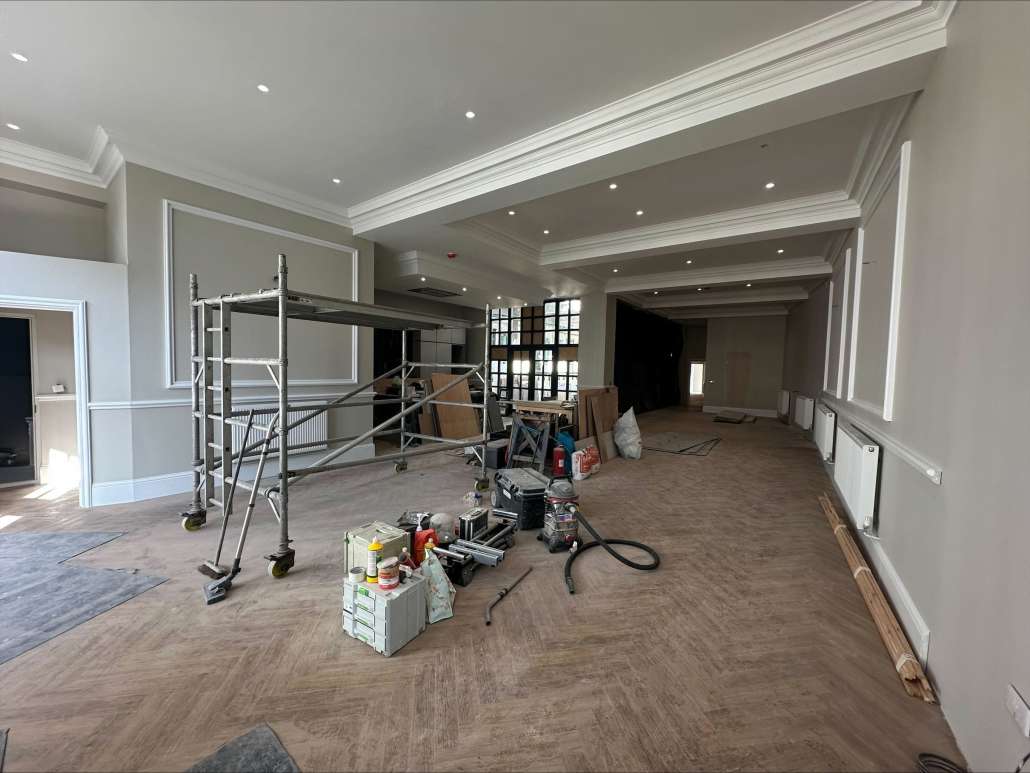
When existing buildings are converted into flats or rooms for residential use, achieving compliance with Approved Document E can be significantly more challenging than in new build construction. Existing floors and walls, hidden voids, chimneys, structural junctions and historic alterations can all create sound transmission paths that are not obvious until testing takes place.
We provide pre-construction sound insulation investigations and design advice to identify likely compliance risks early, before finishes are installed and remedial works become costly and disruptive. This service is particularly valuable for residential conversions, mixed-use developments and heritage or listed buildings, before final stage sound insulation tests are undertaken for Building Regulations compliance
What our residential sound insulation design service provides
- Inspection of existing floors, walls and junctions
- Identification of likely airborne and impact sound failure paths
- Review of proposed construction build-ups against Approved Document E
- Site-specific recommendations for compliant floor and wall upgrades
- Advice on manufacturer systems, independent linings and floating floors
- Practical guidance to reduce the risk of test failure at completion
All advice is based on Approved Document E, manufacturer test data, and our experience of testing thousands of completed dwellings.
Sound insulation testing is normally carried out only once construction is complete. If the building fails, remedial works can be expensive, disruptive and sometimes structurally difficult to implement.
Early acoustic input allows construction details to be corrected before they are built, reducing risk, cost and programme uncertainty.
We have published a technical insight describing the many different ways that sound insulation quantities appear in manufacturers literature and on-site sound tests, and the implications for design.
Acoustic design for BREEAM projects
BREEAM assessments can apply to many types of buildings including healthcare, commercial, industrial, law court and educational projects. Credits are available for acoustics under POL 05 ‘Reduction of Noise Pollution’ and Hea 05 ‘Acoustic Performance.’ Further information is available on our BREEAM page here.
The exact requirements for obtaining BREEAM credits and the number available are dependent on the nature of the development, and whether it is a full fit, shell and core or shell only development. For credits to be awarded for acoustics, a suitably qualified consultant should be involved at all stages from design through to end stage tests to prove compliance.
We offer pre construction surveys, design advice and consultancy, ad-hoc assistance and post construction testing for all types of development in support of BREEAM credits. If your project is subject to a BREEAM assessment, or you would like to discuss the implications of pursuing acoustic credits, please contact us.

David Garritt BEng MIOA
Director and Acoustic Consultant
Speak to an Acoustic Consultant
If you would like to talk to us about any aspect of acoustics and how we can help, please do not hesitate to contact us:
e-mail: contact@sdgarritt.co.uk
Phone: Doncaster main office, 01302 854 303
David Garritt’s mobile, 07894 073 973

Elizabeth Garritt BSc AMIOA
Acoustic Consultant